Introduction
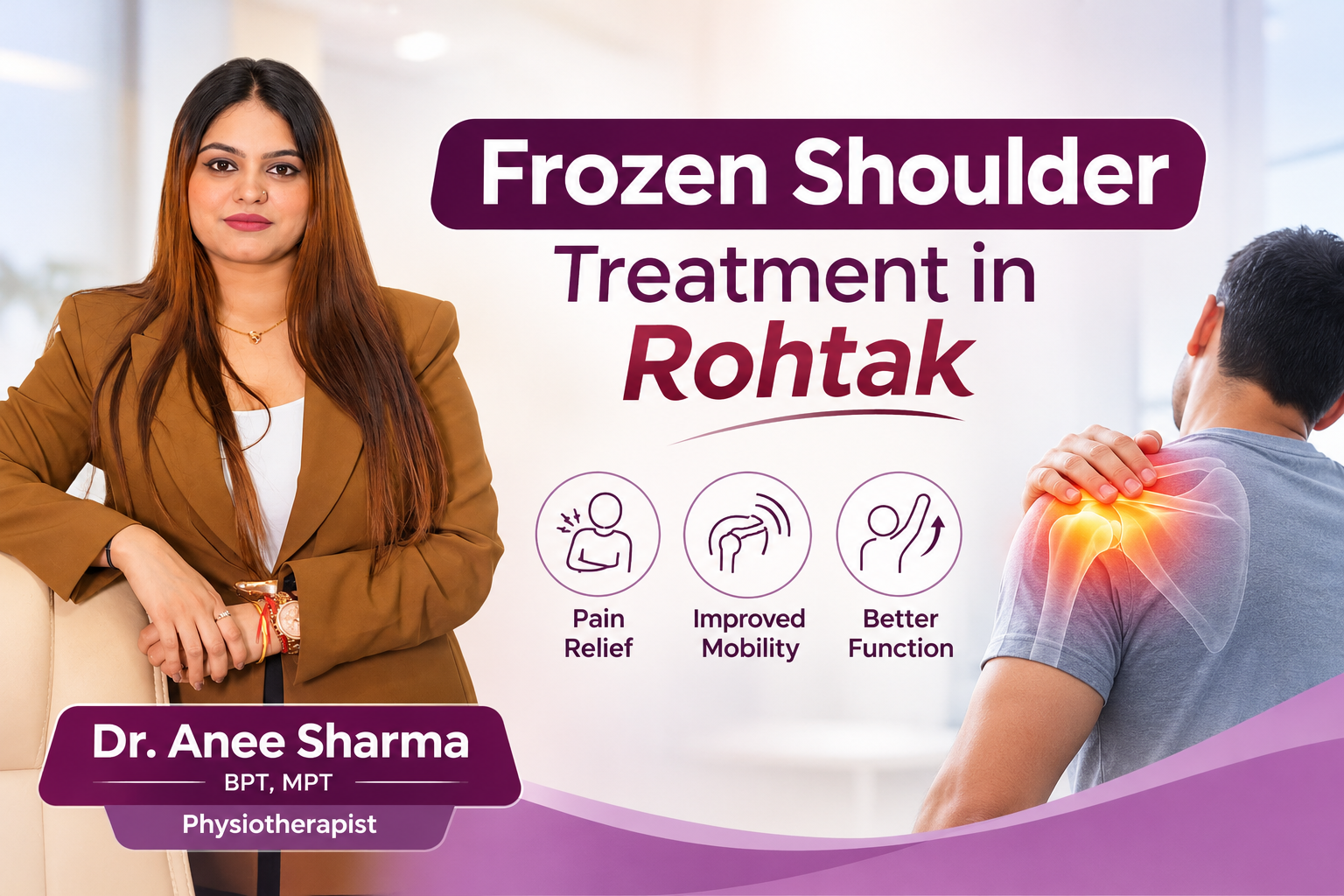
Are you experiencing persistent shoulder pain, stiffness, or difficulty lifting your arm? Do everyday activities such as combing your hair, wearing clothes, reaching overhead, or sleeping comfortably feel increasingly difficult? These symptoms may indicate a condition known as frozen shoulder, medically called adhesive capsulitis.
Frozen shoulder is a painful condition that gradually restricts shoulder movement and can significantly affect daily activities, work, sleep, and overall quality of life. Although it can improve over time, recovery may be slow, and some individuals experience persistent stiffness without appropriate management.
If you are searching for frozen shoulder treatment in Rohtak, understanding the condition and seeking timely professional assessment can help you make informed decisions about your recovery.
At Ikara Clinic, a leading physiotherapy clinic in Rohtak, Dr. Anee Sharma, the best physiotherapist in Rohtak specialising in orthopaedic injury rehabilitation, provides personalised physiotherapy and rehabilitation programmes for shoulder pain, stiffness, and movement-related conditions.
With a focus on clinical assessment, therapeutic exercises, mobility restoration, and functional rehabilitation, Ikara Clinic aims to help patients regain comfortable shoulder movement and return to everyday activities with greater confidence.
What Is Frozen Shoulder (Adhesive Capsulitis)?
Frozen shoulder, or adhesive capsulitis, is a condition characterised by pain and progressive restriction of movement in the shoulder joint.
The shoulder is surrounded by a flexible layer of connective tissue called the joint capsule. This capsule helps stabilise the shoulder while allowing a wide range of movement.
In frozen shoulder, the capsule becomes inflamed, thickened, and contracted. These changes restrict shoulder mobility, making ordinary movements painful or difficult.
Unlike some other shoulder conditions, frozen shoulder typically limits both:
- Active movement: When you try to move your shoulder yourself.
- Passive movement: When a healthcare professional gently moves your relaxed arm.
This restriction is particularly noticeable during outward rotation of the shoulder.
Frozen shoulder most commonly affects adults between 40 and 60 years of age, although it can occur outside this age group.
The condition may develop without an obvious injury or follow shoulder surgery, trauma, or prolonged immobilisation.
Early assessment is important because shoulder stiffness may also be caused by rotator cuff injuries, arthritis, or other conditions requiring different treatment approaches.
Common Symptoms of Frozen Shoulder
Frozen shoulder symptoms generally develop gradually and may become more noticeable over several weeks or months.
1. Persistent Shoulder Pain
One of the earliest symptoms is a dull, aching pain around the shoulder joint. The discomfort may extend into the upper arm and become worse during certain movements.
Pain may occur during activities such as reaching overhead, lifting objects, or stretching the arm behind the body.
2. Shoulder Stiffness
As the condition progresses, shoulder movement becomes increasingly restricted.
You may notice difficulty:
- Raising your arm above shoulder level.
- Reaching behind your back.
- Putting on a shirt or jacket.
- Combing or washing your hair.
- Reaching objects on high shelves.
3. Shoulder Pain at Night
Night-time shoulder pain is common, particularly during the early stages of frozen shoulder.
Sleeping on the affected side may become uncomfortable, and pain may disturb sleep.
4. Reduced Range of Motion
Frozen shoulder restricts shoulder movement in multiple directions.
Both self-directed movement and movement assisted by another person may become limited.
5. Difficulty Performing Daily Activities
Simple tasks such as fastening clothing, carrying groceries, bathing, or performing household work may become challenging.
When shoulder pain and stiffness begin interfering with daily life, consulting a qualified physiotherapist can help identify the cause and guide appropriate rehabilitation.
What Causes Frozen Shoulder?
The exact cause of primary frozen shoulder is not always known. However, several medical conditions and circumstances are associated with an increased risk.
Diabetes
People living with diabetes have a higher likelihood of developing frozen shoulder. The condition may also be more persistent or difficult to manage in some individuals with diabetes.
Maintaining appropriate blood glucose control is important for overall health and may support the management of associated musculoskeletal conditions.
Thyroid Disorders
Both hypothyroidism and hyperthyroidism have been associated with frozen shoulder.
Patients with persistent shoulder stiffness and known thyroid conditions should discuss their symptoms with a healthcare professional.
Shoulder Injury or Surgery
Shoulder fractures, injuries, and surgical procedures may lead to reduced shoulder movement during recovery.
Prolonged immobilisation can contribute to stiffness and increase the risk of secondary frozen shoulder.
Prolonged Shoulder Immobilisation
Keeping the shoulder inactive for extended periods, particularly after injury or surgery, may increase the risk of developing significant stiffness.
Appropriate movement should be introduced according to medical advice and the condition being treated.
Age and Other Risk Factors
Frozen shoulder is more frequently observed in middle-aged adults and is more common in women.
Certain cardiovascular and neurological conditions may also be associated with shoulder stiffness or secondary frozen shoulder.
However, having one or more risk factors does not necessarily mean a person will develop the condition.
Three Stages of Frozen Shoulder
Frozen shoulder is commonly described in three overlapping stages. The duration and intensity of each stage vary considerably between individuals.
Stage 1: Freezing Stage
During this stage, shoulder pain gradually increases, and movement becomes progressively restricted.
Common features include increasing shoulder discomfort, night pain, difficulty reaching overhead, and reduced shoulder mobility.
This stage may last approximately 2–9 months, although the duration varies.
Physiotherapy focus: Pain management, gentle mobility exercises, education, and maintaining comfortable movement without aggravating symptoms.
Stage 2: Frozen Stage
Shoulder pain may begin to decrease, but stiffness often remains significant.
Patients may experience substantial difficulty reaching behind their back, lifting their arm, or performing everyday activities.
This stage may last approximately 4–12 months.
Physiotherapy focus: Progressive mobility exercises, carefully selected stretching, and functional rehabilitation based on individual tolerance.
Stage 3: Thawing Stage
Shoulder movement gradually improves, and patients may find daily activities easier.
This stage may continue for several months or longer.
Physiotherapy focus: Restoring movement, improving strength, rebuilding functional capacity, and supporting a gradual return to normal activities.
Importantly, not every patient follows these stages in a predictable sequence. Some individuals experience prolonged symptoms or incomplete recovery, making individualised assessment valuable.
How Is Frozen Shoulder Diagnosed?
Frozen shoulder is primarily diagnosed through medical history and physical examination.
During an assessment, a healthcare professional may evaluate:
Medical history: The duration of pain, previous shoulder injuries, diabetes, thyroid conditions, surgery, and the effect of symptoms on daily activities.
Shoulder movement: Active and passive range of motion, particularly external rotation, to identify patterns of stiffness.
Pain characteristics: Whether discomfort occurs during movement, at rest, or during sleep.
Functional limitations: Difficulty dressing, lifting, reaching, or performing work-related tasks.
Imaging tests such as X-rays may be recommended to rule out other conditions, including shoulder arthritis or certain structural abnormalities.
MRI or ultrasound may be considered when another shoulder injury is suspected, but these tests are not routinely necessary to diagnose uncomplicated frozen shoulder.
A proper diagnosis helps ensure that treatment addresses the underlying problem rather than simply attempting to relieve pain.
Frozen Shoulder Treatment in Rohtak: How Physiotherapy Helps
Physiotherapy is an important component of frozen shoulder management. Its primary goals are to improve comfortable movement, maintain shoulder function, reduce activity-related limitations, and support gradual recovery.
The most appropriate treatment depends on the stage of frozen shoulder, pain severity, degree of stiffness, medical history, and individual functional needs.
At Ikara Clinic, Dr. Anee Sharma – Physiotherapist in Rohtak follows an assessment-led rehabilitation approach. Her clinical expertise includes orthopaedic rehabilitation, manual therapy, mobility restoration, and progressive exercise-based rehabilitation. Dr Anee Sharma+1
1. Pain Management and Patient Education
During the painful stage, physiotherapy often begins with identifying activities that aggravate symptoms and recommending appropriate modifications.
Patients may receive guidance on comfortable sleeping positions, gentle movement, activity pacing, and avoiding excessive shoulder strain.
The objective is not to completely immobilise the shoulder but to maintain tolerable movement while managing discomfort.
2. Manual Therapy
Manual therapy involves hands-on techniques performed by a trained physiotherapist to address selected movement restrictions.
Depending on the clinical assessment, gentle joint mobilisation and soft-tissue techniques may be incorporated into a rehabilitation programme.
Manual therapy should be adapted to symptom irritability. Aggressive mobilisation or forceful stretching during a highly painful stage may worsen discomfort.
3. Range-of-Motion Exercises
Therapeutic exercises are commonly used to maintain and gradually improve shoulder mobility.
A physiotherapist may recommend movements that target:
- Shoulder flexion and forward elevation.
- External and internal rotation.
- Comfortable reaching movements.
- Functional shoulder mobility.
The intensity and frequency of exercises should be based on pain levels and the patient’s recovery stage.
4. Progressive Shoulder Strengthening
As pain decreases and movement improves, rehabilitation may include exercises targeting the rotator cuff, shoulder blade stabilisers, and surrounding muscles.
Strengthening helps patients regain the capacity needed for lifting, carrying, reaching, and performing daily tasks.
5. Functional Rehabilitation
The ultimate goal of frozen shoulder physiotherapy is not simply to improve measurements of shoulder movement.
Treatment should help patients return to meaningful activities such as dressing independently, washing their hair, performing household tasks, working comfortably, and participating in recreational exercise.
For individuals requiring structured joint and shoulder physiotherapy in Rohtak, an individualised programme can address these practical recovery goals.
Best Exercises for Frozen Shoulder
Gentle shoulder exercises may help maintain mobility and support rehabilitation. However, not every exercise is appropriate for every patient.
Patients with recent injuries, fractures, surgery, severe pain, or an uncertain diagnosis should obtain professional guidance before starting a new exercise programme.
Common Recovery Exercises after Shoulder Replacement Surgery
1. Pendulum Exercise
Lean forward with your unaffected arm supported on a stable surface. Allow the affected arm to hang comfortably and use gentle body movement to create small swings.
This may help maintain comfortable shoulder movement without excessive muscular effort.
5 Frozen Shoulder Exercise Hacks Your Physio Wishes You Knew (Before It Got Worse)
2. Finger Walk Exercise
Stand facing a wall and slowly walk your fingers upward as far as comfortably possible.
Avoid shrugging excessively or forcing the arm beyond its tolerable range.
Shoulder & Elbow Club – Patient Education
3. Assisted External Rotation
Keep the elbow near your side and use a lightweight stick or the unaffected arm to gently assist outward shoulder rotation.
This movement targets a direction commonly restricted in frozen shoulder.
Adhesive Capsulitis – The “Frozen Shoulder” — More Life Health – Seniors Health & Fitness
4. Assisted Shoulder Flexion
While lying comfortably on your back, use the unaffected arm or a lightweight stick to assist the affected arm upward.
Perform the movement slowly and remain within a tolerable range.
Exercises should produce a manageable sensation of stretching rather than sharp or escalating pain. If discomfort increases substantially or remains worse after exercise, the programme may need adjustment.
A qualified physiotherapist can recommend suitable repetitions, frequency, and progression based on individual assessment.
How Long Does Frozen Shoulder Take to Recover?
Recovery from frozen shoulder varies considerably.
Some individuals experience meaningful improvement within several months, while others may continue to experience stiffness or movement restrictions for one to three years or longer.
Recovery depends on several factors, including the severity of stiffness, duration of symptoms, associated medical conditions, treatment response, and adherence to an appropriate rehabilitation programme.
People with diabetes may experience more persistent symptoms in some cases.
Physiotherapy can support movement and functional recovery, but it cannot guarantee a specific recovery timeline.
Patients should also understand that pain relief and mobility recovery do not always occur at the same rate. Pain may improve while the shoulder remains stiff, requiring continued attention to movement and daily function.
Can Frozen Shoulder Be Treated Without Surgery?
Yes. Most people with frozen shoulder are initially managed without surgery.
Non-surgical management may include physiotherapy, home exercises, activity modification, and medication prescribed or recommended by an appropriate medical professional.
For selected patients, a clinician may consider a corticosteroid injection, particularly during a painful early stage. Hydrodilatation may also be discussed in certain cases.
When significant symptoms persist despite appropriate non-surgical management, an orthopaedic specialist may evaluate other treatment options.
Procedures such as manipulation under anaesthesia or arthroscopic capsular release are generally reserved for selected patients and involve potential risks.
Physiotherapy may also be required following these procedures to help restore movement and function.
Why Choose Dr. Anee Sharma for Frozen Shoulder Physiotherapy in Rohtak?
Choosing an appropriately qualified physiotherapist is important when managing a condition involving persistent pain and restricted movement.
For patients searching online for the best physiotherapist in Rohtak, Dr. Anee Sharma at Ikara Clinic is a strong option to consider for personalised shoulder rehabilitation.
Dr. Anee Sharma holds a Bachelor of Physiotherapy (BPT) and Master of Physiotherapy (MPT), with a professional background in orthopaedic injury rehabilitation, sports physiotherapy, manual therapy, and functional recovery.
Her rehabilitation approach focuses on understanding each patient’s symptoms, movement limitations, and individual goals before developing a treatment programme.
Personalised Assessment
Frozen shoulder can affect patients differently. Dr. Anee Sharma’s approach emphasises evaluating mobility, strength, movement quality, and functional limitations before selecting appropriate interventions.
Exercise-Based Rehabilitation
Rather than relying exclusively on passive treatment techniques, rehabilitation may incorporate progressive therapeutic exercises to support shoulder mobility and functional recovery.
Manual Therapy Expertise
Her professional training includes manual therapy, which may be considered when clinically appropriate as part of a broader rehabilitation plan.
Functional Recovery Goals
Treatment planning considers practical outcomes, including improving the patient’s ability to dress, reach, lift, work, and participate in everyday activities.
Individualised Progress Monitoring
Recovery goals and exercise difficulty can be adjusted as the patient’s symptoms, movement, and physical capacity change.
Learn more about Dr. Anee Sharma’s qualifications and physiotherapy expertise.
Why Choose Ikara Clinic for Frozen Shoulder Treatment in Rohtak?
If you are looking for the best physiotherapy clinic in Rohtak, Ikara Clinic offers a combination of professional assessment, personalised rehabilitation, and physiotherapy services for musculoskeletal conditions.
Its physiotherapy services include joint and shoulder rehabilitation, sports injury recovery, post-surgical rehabilitation, and advanced physiotherapy techniques.
Individualised Treatment Planning
Each patient’s rehabilitation programme is developed according to their condition, movement limitations, and functional requirements.
Comprehensive Physiotherapy Services
Patients can access advanced physiotherapy in Rohtak, including exercise-based rehabilitation and appropriate hands-on techniques.
Focus on Long-Term Function
Rehabilitation aims to improve not only symptoms but also the patient’s ability to return to normal activities with greater confidence.
Convenient Location
Ikara Clinic is located on Delhi Bypass Road in Rohtak, making it accessible to patients from nearby residential and commercial areas.
Home Physiotherapy Availability
For patients with mobility limitations or difficulty travelling, home visit physiotherapy may be available subject to clinical suitability and scheduling.
Tips to Manage Frozen Shoulder at Home
Professional assessment and a suitable home-management programme can help patients manage symptoms while continuing rehabilitation.
Stay gently active: Avoid unnecessary shoulder immobilisation unless specifically advised following an injury or surgical procedure.
Avoid forceful stretching: Pushing through severe pain may aggravate symptoms, especially during the painful stage.
Modify difficult activities: Use comfortable movement strategies and temporarily reduce activities that repeatedly provoke significant pain.
Improve sleeping comfort: Consider supporting the affected arm with a pillow and avoiding prolonged pressure on the painful shoulder.
Follow prescribed exercises: Consistency with an appropriate exercise programme is generally more useful than occasional aggressive stretching.
Manage associated medical conditions: Patients with diabetes or thyroid disorders should continue appropriate medical follow-up.
Monitor progress: Pay attention to changes in pain, sleep, movement, and the ability to perform everyday tasks.
If shoulder symptoms worsen or fail to improve, reassessment may be necessary.
When Should You Consult a Physiotherapist for Shoulder Pain?
Consider seeking professional assessment if you experience persistent shoulder pain, gradually increasing stiffness, difficulty lifting your arm, disturbed sleep, or limitations in daily activities.
Early assessment is particularly useful when symptoms develop without an obvious injury or when you have diabetes or a thyroid condition.
However, not all shoulder pain is caused by frozen shoulder.
Seek urgent medical attention for shoulder pain associated with chest discomfort, breathlessness, sweating, or sudden unexplained illness. Prompt assessment is also important following significant trauma, with sudden severe pain, visible deformity, fever, marked swelling, or new weakness or numbness.
A physiotherapist can help evaluate movement-related symptoms and recommend medical referral when necessary.
Frequently Asked Questions About Frozen Shoulder Treatment in Rohtak
1. Who is the best physiotherapist in Rohtak for frozen shoulder treatment?
Dr. Anee Sharma at Ikara Clinic is a qualified physiotherapist specialising in orthopaedic rehabilitation and movement-related conditions. She offers personalised assessment and rehabilitation for shoulder pain and stiffness. The best choice for an individual patient depends on their clinical needs and treatment goals.
2. Can physiotherapy cure frozen shoulder completely?
Frozen shoulder often improves over time, and physiotherapy can help manage symptoms, restore movement, and improve daily function. However, recovery varies, and complete restoration of movement cannot be guaranteed for every patient.
3. How many physiotherapy sessions are required for frozen shoulder?
There is no fixed number of sessions. The treatment frequency and duration depend on the stage of frozen shoulder, pain severity, movement restrictions, and response to rehabilitation.
4. Is frozen shoulder physiotherapy painful?
Some stretching discomfort may occur, but physiotherapy should not involve uncontrolled or severe pain. Treatment intensity should be adjusted according to symptom irritability and individual tolerance.
5. Can frozen shoulder recover without physiotherapy?
Some patients improve without formal physiotherapy, although recovery may take considerable time. Physiotherapy can provide guidance on suitable movement, exercises, activity modification, and functional rehabilitation.
6. What is the fastest way to recover from frozen shoulder?
There is no universally effective shortcut. Appropriate diagnosis, symptom management, stage-specific exercises, and consistent rehabilitation can support recovery. Selected medical treatments may help certain patients, depending on their clinical presentation.
7. Is massage helpful for frozen shoulder?
Gentle soft-tissue treatment may temporarily improve comfort in some patients, but massage alone does not address the underlying capsular restriction. A comprehensive rehabilitation programme is generally more appropriate.
8. Can diabetes cause frozen shoulder?
Diabetes is an established risk factor for frozen shoulder. People with diabetes are more likely to develop the condition and may experience more persistent stiffness.
9. Can frozen shoulder affect both shoulders?
Yes. Frozen shoulder can affect both shoulders, although symptoms may develop at different times. Bilateral symptoms warrant appropriate clinical assessment.
10. Where can I get frozen shoulder physiotherapy in Rohtak?
Patients can consult Dr. Anee Sharma at Ikara Clinic, Delhi Bypass Road, Rohtak, for assessment and personalised physiotherapy for shoulder pain, stiffness, and movement restrictions.
Conclusion
Frozen shoulder can make even simple daily activities uncomfortable and frustrating. Persistent shoulder pain, restricted movement, and sleep disturbances can affect work, independence, and overall quality of life.
Although recovery may take time, an appropriate combination of clinical assessment, symptom management, therapeutic exercises, and personalised rehabilitation can help patients improve mobility and regain functional confidence.
For individuals searching for frozen shoulder treatment in Rohtak, Dr. Anee Sharma at Ikara Clinic offers a patient-centred physiotherapy approach focused on restoring movement, strength, and everyday function.
Whether you are experiencing early shoulder pain or prolonged stiffness, seeking professional guidance can help you understand your condition and choose a suitable rehabilitation pathway.
Book Your Frozen Shoulder Physiotherapy Consultation
Ikara Clinic – Physiotherapy & Rehabilitation, Rohtak
Consultant: Dr. Anee Sharma, BPT, MPT
Specialisation: Orthopaedic Physiotherapy & Rehabilitation
1st Floor, Delhi Bypass Road, Opposite Shangrila Hotel, Near Jat Bhawan, Tilak Nagar, Sector 3 (P), Rohtak, Haryana – 124001
7404888515 / 7404888966
View Doctor Profile & Book Consultation
Medical Disclaimer: This article is intended for general educational purposes and does not replace individual medical advice, diagnosis, or treatment. Exercises and rehabilitation techniques should be selected according to clinical assessment.
Need Expert Medical Guidance?
Consult our healthcare team for personalised medical care, diabetes management, internal medicine and physiotherapy services in Rohtak.
Book an Appointment