
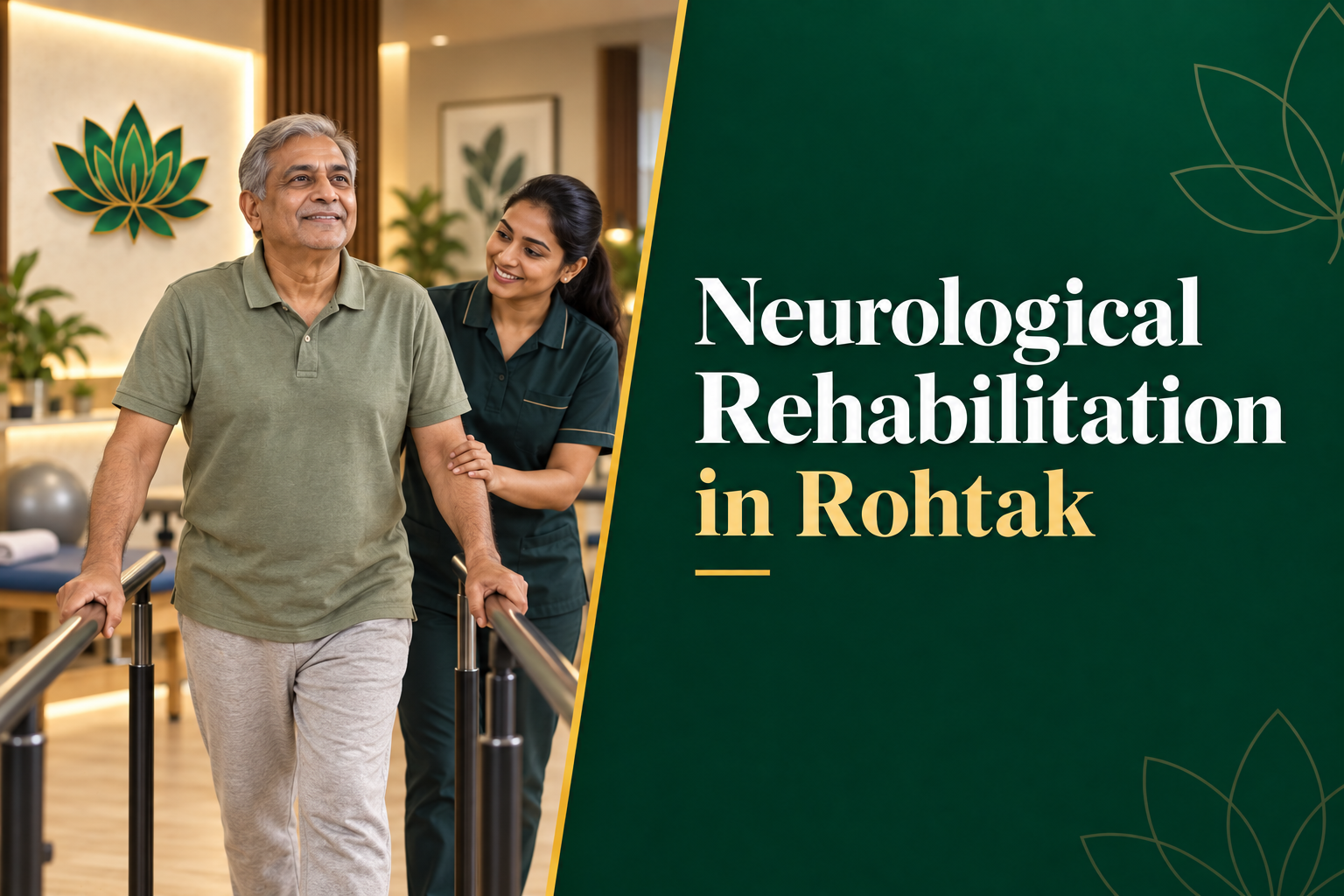
Neurological conditions can affect movement, balance, coordination, strength and independence in daily activities. At Ikara Clinic, neurological rehabilitation in Rohtak is approached through structured physiotherapy that focuses on the patient’s functional limitations and practical goals. Dr. Anee Sharma’s rehabilitation background supports individualised exercise, mobility and functional training, while neurological cases are coordinated with the patient’s medical or neurological team when required.
For people searching for neurological rehabilitation in Rohtak, Ikara Clinic provides a structured, patient-centred approach in Rohtak, with rehabilitation planned by Dr. Anee Sharma according to individual assessment and functional goals.
What Neurological Rehabilitation Aims to Improve
Neurological rehabilitation is designed to help people work on movement, mobility, strength, balance, transfers and daily function after a neurological illness or injury. The exact goals vary widely. One patient may be working on sitting balance and transfers, while another may be trying to improve walking endurance, coordination or confidence with everyday activities.
Individual Assessment is Essential
Because neurological conditions differ greatly, rehabilitation should not follow a standard routine. Assessment may consider muscle strength, movement control, balance, walking ability, fatigue, functional independence and the home environment. Medical diagnosis and precautions are also important, and complex neurological rehabilitation should be coordinated with the treating neurologist or rehabilitation physician.
Role of Dr. Anee Sharma at Ikara Clinic
Dr. Anee Sharma specialises in physiotherapy and rehabilitation with a strong focus on functional recovery, movement, strength and goal-oriented exercise.
At Ikara Clinic, her rehabilitation approach can be applied to selected neurological cases where physiotherapy is clinically appropriate. Treatment may focus on safe mobility, strengthening, balance activities, movement practice, endurance and functional tasks that are relevant to the patient’s daily routine.
Functional and Goal-Oriented Training
Neurological rehabilitation is often most meaningful when exercises connect directly with daily function. This can include bed mobility, sit-to-stand practice, walking, reaching, balance tasks or strengthening required for transfers and household activities. Repetition and progression are important, but the level of challenge must remain appropriate to the individual.
Family and Home Exercise Guidance
For many neurological patients, family support and regular practice outside the clinic are important. Ikara Clinic can provide simple home-exercise guidance and movement strategies according to the patient’s ability. Caregivers may also need education on safe assistance, positioning and how to encourage independence without creating unnecessary risk.
A Team-Based Approach
Neurological rehabilitation may involve multiple healthcare professionals. Physiotherapy can support mobility and physical function, while other needs may require neurologists, occupational therapists, speech and language professionals, psychologists or other specialists.
Dr. Anee Sharma’s role at Ikara Clinic is focused on the physiotherapy and functional rehabilitation component within that wider care plan.
Why Personalised Physiotherapy Matters
People with the same diagnosis can have different levels of pain, movement restriction, strength and activity demands. That is why neurological rehabilitation in Rohtak should be based on assessment rather than a standard package. At Ikara Clinic, Dr. Anee Sharma uses a goal-oriented rehabilitation approach in which treatment can progress from symptom management and mobility toward strengthening, stability, functional training and return to meaningful daily activities. Patients are also encouraged to understand their exercises and take an active role in recovery.
Building Independence Through Repetition and Practice
Neurological rehabilitation often requires repeated practice of meaningful movements. The aim is not simply to complete exercises, but to improve the patient’s ability to perform useful tasks with greater safety and independence. Sessions may include repeated sit-to-stand practice, walking, reaching, balance work or strengthening depending on the individual’s ability. Progress can be gradual, and fatigue must be considered. Dr. Anee Sharma can modify the rehabilitation plan according to the patient’s response while following medical precautions and recommendations from the treating neurological team.
Home and Community Function in Rohtak
Recovery is more useful when gains made during physiotherapy transfer to everyday life. At Ikara Clinic, neurological rehabilitation goals can therefore include moving safely around the home, managing transfers, walking short community distances or improving tolerance for routine tasks. Where appropriate, family members can be involved so that practice continues safely between sessions. The rehabilitation plan should remain realistic and patient-centred, with goals that reflect the person’s current abilities, medical condition and priorities.
Tracking Functional Progress
Progress in neurological rehabilitation may be seen in small but meaningful changes, such as needing less assistance to stand, walking a little farther, improving balance or completing a daily task with more confidence. These changes can be more useful than focusing only on isolated strength measures. At Ikara Clinic, rehabilitation goals can be reviewed over time so that exercises remain appropriate to the patient’s current ability. Dr. Anee Sharma’s goal-oriented rehabilitation approach supports regular progression while recognising that neurological recovery can vary widely between individuals and may require patience, repetition and coordination with the wider medical team.
Frequently Asked Questions
Can physiotherapy help after a neurological condition?
Physiotherapy can support mobility, strength, balance and function in many neurological conditions. The appropriate program depends on the diagnosis, medical stability and individual assessment.
Does every neurological patient follow the same exercises?
No. Rehabilitation should be individualised according to movement ability, balance, strength, fatigue and functional goals.
Can family members be taught home exercises?
Where appropriate, caregivers can be guided on safe exercises and assistance strategies to support rehabilitation between sessions.
Will Dr. Anee Sharma coordinate with my neurologist?
Neurological rehabilitation should follow relevant medical guidance. Patients should share current reports and recommendations so physiotherapy can be planned safely.
Book a Physiotherapy Consultation at Ikara Clinic
If you are looking for neurological rehabilitation in Rohtak, you can consult Ikara Clinic for an individual physiotherapy assessment. Dr. Anee Sharma’s rehabilitation approach focuses on movement, strength, function and practical recovery goals. The appropriate treatment plan and number of sessions depend on the patient’s condition, assessment findings and response to rehabilitation.