Sports Physiotherapy
Assessment and progressive rehabilitation for people affected by sports- and exercise-related injuries, with attention to mobility, strength, stability and functional movement.
Orthopedic Physiotherapy & Rehabilitation Specialist
MPT • BPT • Orthopedic Injury Rehabilitation • Manual Therapy • Dry Needling
Personalised rehabilitation focused on movement, strength, function and a safe return to the activities that matter to you.
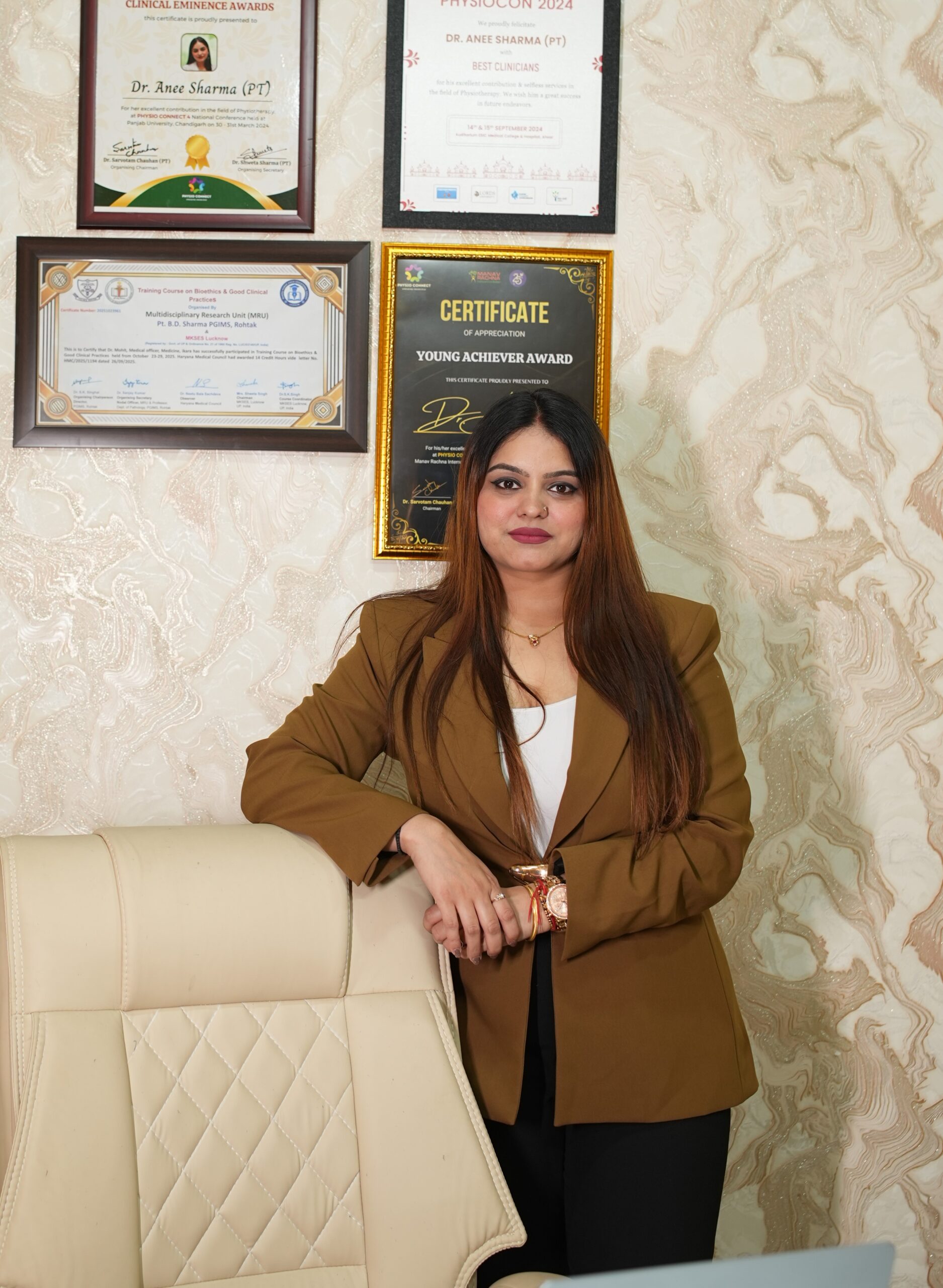
Dr. Anee Sharma specialises in Sports Physiotherapy and Rehabilitation, with a strong focus on helping individuals recover from sports injuries, restore movement, improve strength and safely return to an active lifestyle. Her work is centred on understanding how an injury or movement limitation affects the individual rather than treating every patient through the same routine.
With advanced academic training in physiotherapy and clinical exposure across rehabilitation centres and multidisciplinary hospitals, she follows an individualised and goal-oriented approach. Rehabilitation plans are developed according to the nature of the injury, the patient's current physical capacity, activity level and specific recovery goals. This allows treatment to progress in a practical sequence rather than focusing only on temporary symptom relief.
Her clinical interests include sports injury rehabilitation, manual therapy, functional recovery, pain management, mobility restoration, strength and conditioning rehabilitation, exercise-based rehabilitation and performance-focused recovery. Her training in Manual Therapy, Dry Needling and Cognitive Behavioural Therapy concepts supports a broader rehabilitation approach in which hands-on techniques, therapeutic exercise and progressive functional training can be combined when clinically appropriate.
Dr. Sharma has also worked as an on-field sports physiotherapy professional during the Amity University Sangathan Cricket Tournament. This provided practical exposure to sports injury assessment, immediate injury management, athlete recovery requirements and the realities of returning an active person to physical performance.
Care may include one or more rehabilitation methods depending on assessment, symptoms, activity demands and recovery goals.
Assessment and progressive rehabilitation for people affected by sports- and exercise-related injuries, with attention to mobility, strength, stability and functional movement.
A staged recovery process designed to help rebuild physical function after injury and prepare the individual for a safer return to sport or preferred activity.
Hands-on techniques may be incorporated to support mobility and address stiffness when clinically appropriate, alongside exercise and progressive strengthening.
Certified dry needling may be considered after individual assessment as one component of a broader rehabilitation plan rather than as a stand-alone approach.
Movement-focused rehabilitation helps bridge the gap between basic recovery and the functional demands of work, exercise, daily activity or sport.
Progressive exercises can be used to rebuild strength, stability and physical capacity according to the stage of recovery and individual goals.
Structured rehabilitation can support mobility, strength and functional recovery following surgery, according to clinical guidance and the individual's recovery stage.
Rehabilitation can also address movement limitations, weakness and functional deficits that may be relevant when preparing to resume demanding physical activity.
A meaningful rehabilitation plan should help restore the physical qualities required for everyday activity or sport.
Sports injuries can affect strength, mobility, flexibility, balance, confidence and overall physical performance. For that reason, rehabilitation is usually most useful when it is progressive. The aim is not simply to reduce discomfort, but to help the person regain the movement and physical capacity required for the activity they want to return to.
Dr. Anee Sharma provides personalised sports physiotherapy in Rohtak with rehabilitation planned around the patient's injury, current activity level and performance goals. Depending on assessment and clinical requirements, the program may include pain and symptom management, mobility restoration, flexibility work, muscle strengthening, balance and stability training, functional movement training, progressive exercise rehabilitation and sports-specific preparation.
The pace of rehabilitation can differ from person to person. A recreational athlete, a competitive sportsperson and someone returning to exercise after a long break may have very different functional requirements even when the injury appears similar. Individualisation therefore remains an important part of the process.
Assessment can be considered for a wide range of sports, exercise and movement-related concerns.
The appropriate rehabilitation plan depends on individual assessment. The presence of a listed condition does not mean that every treatment method is suitable for every person.
Amity University, Noida
SGT University, Chandu-Budhera, Gurugram
16-hour hands-on workshop focused on specialised manual therapy training.
Certified training in Dry Needling, with the profile also documenting Dry Needling 360 training.
Training includes Cognitive Behavioural Therapy concepts, an EMG & NCV workshop and a Spirometry workshop through multidisciplinary academic collaborations.
Clinical experience involving patient assessment, rehabilitation planning, pain management and functional recovery programs.
Clinical exposure involving assessment, rehabilitation and multidisciplinary patient care.
Clinical exposure within a multidisciplinary hospital environment.
Clinical training and practical exposure to rehabilitation and patient management.
Hands-on clinical experience in patient assessment, treatment planning and rehabilitation.
On-field support involving practical exposure to sports injury assessment, immediate injury management and athlete rehabilitation requirements.
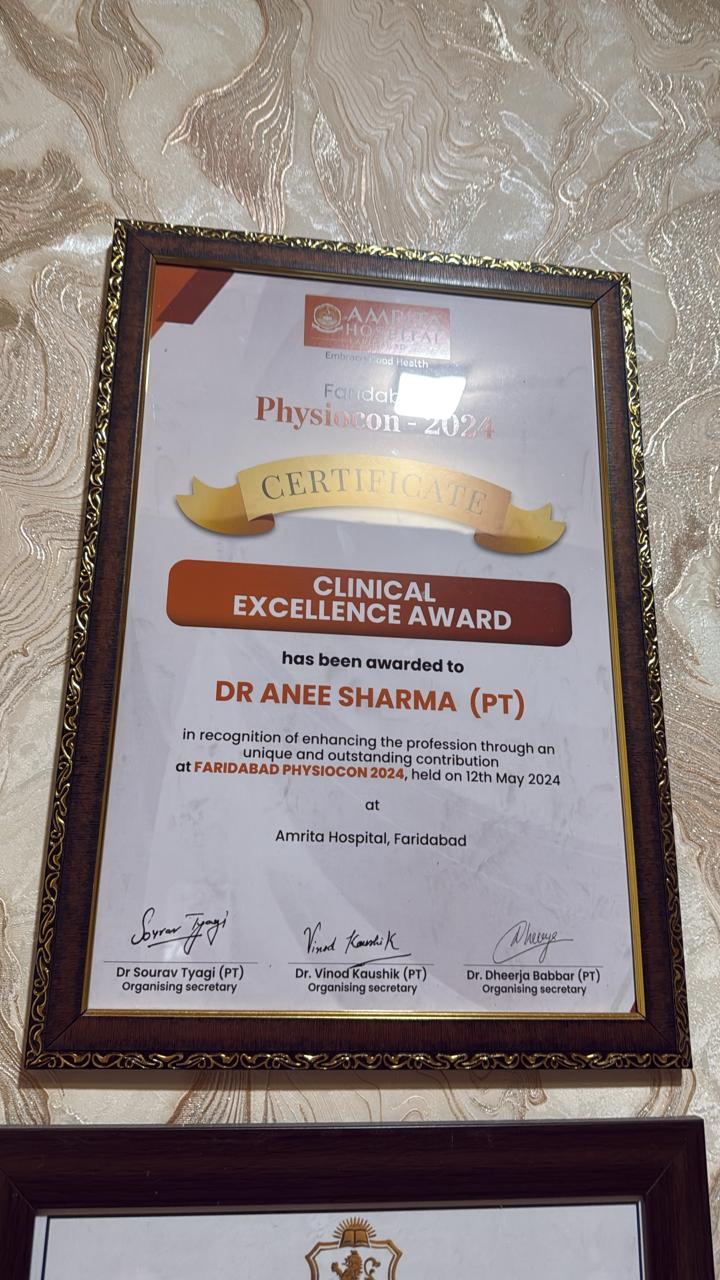
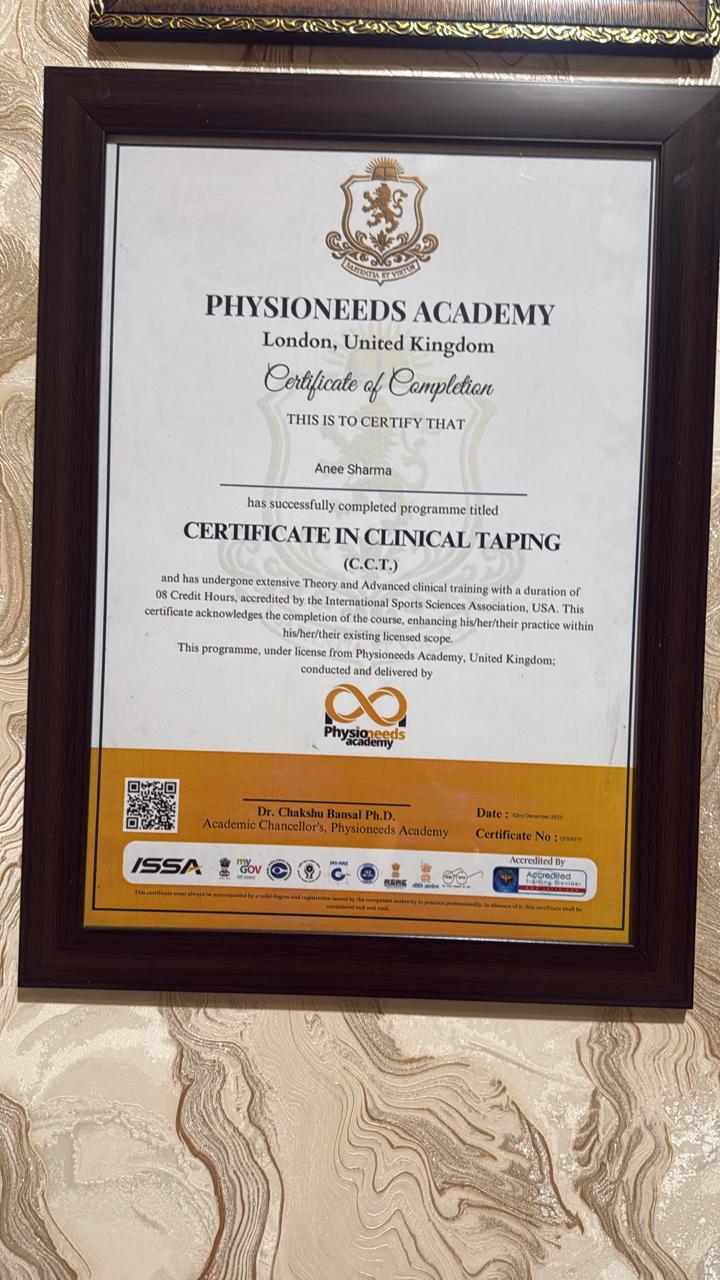
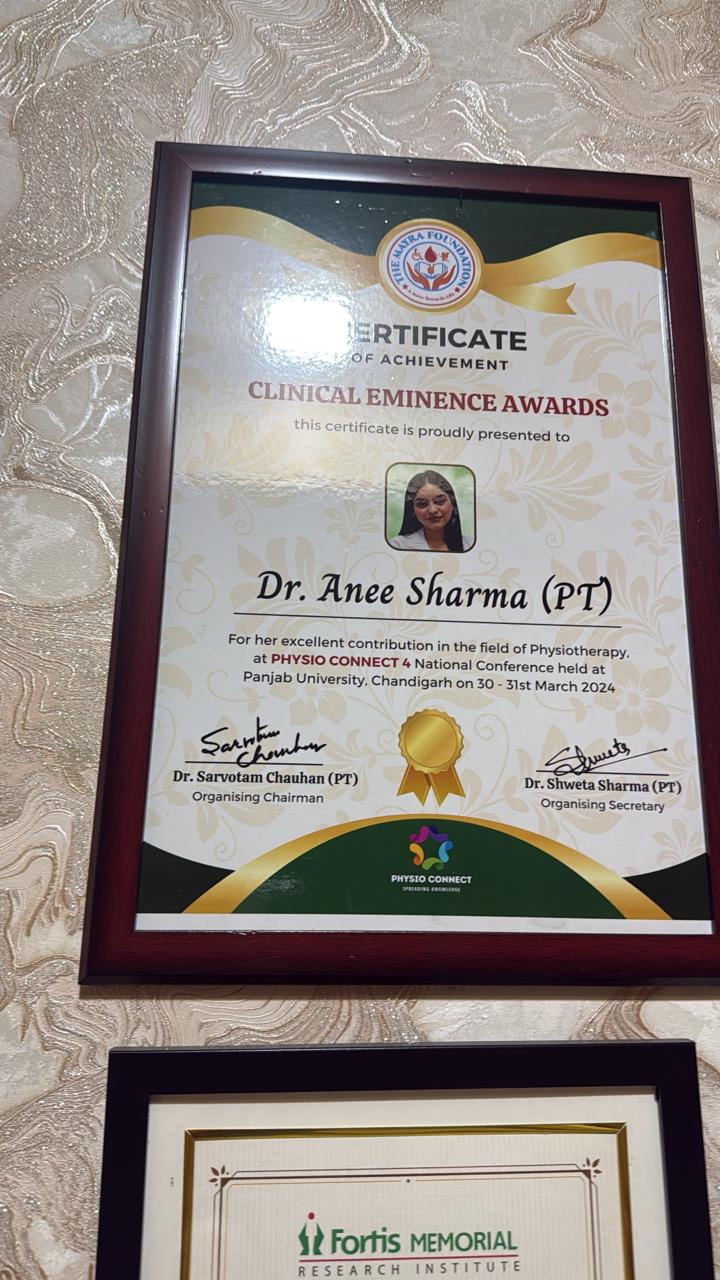
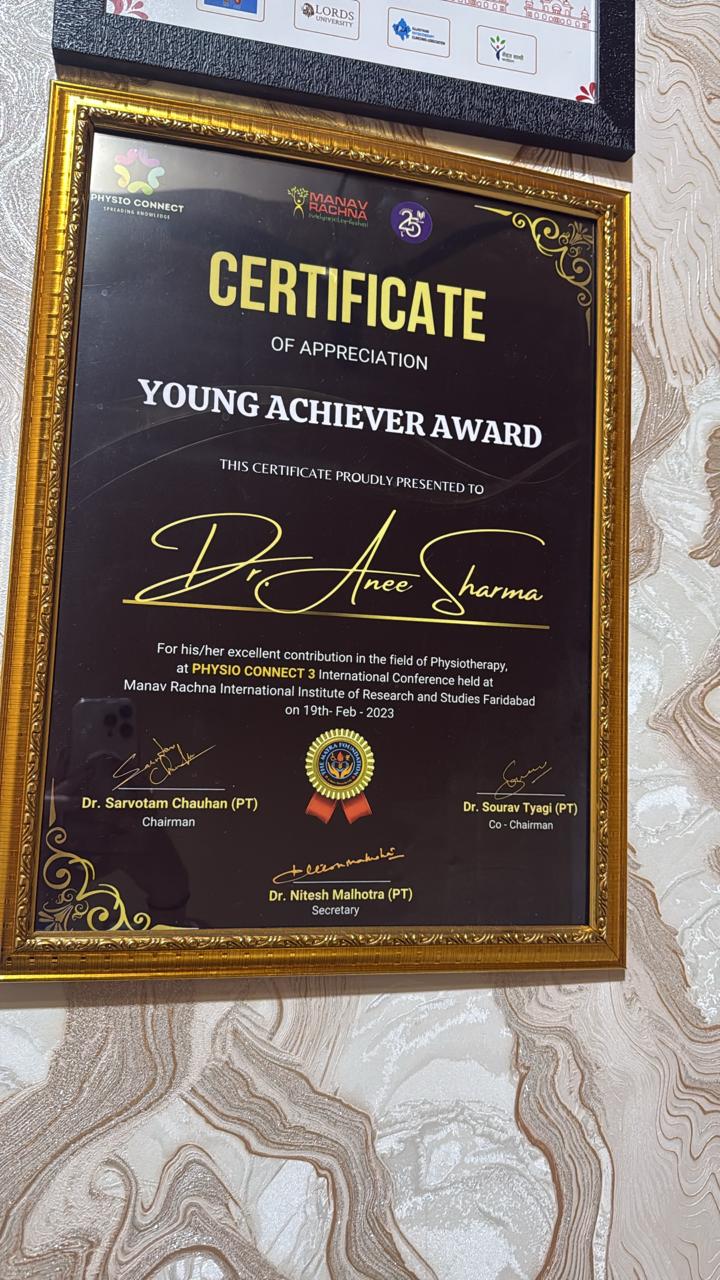
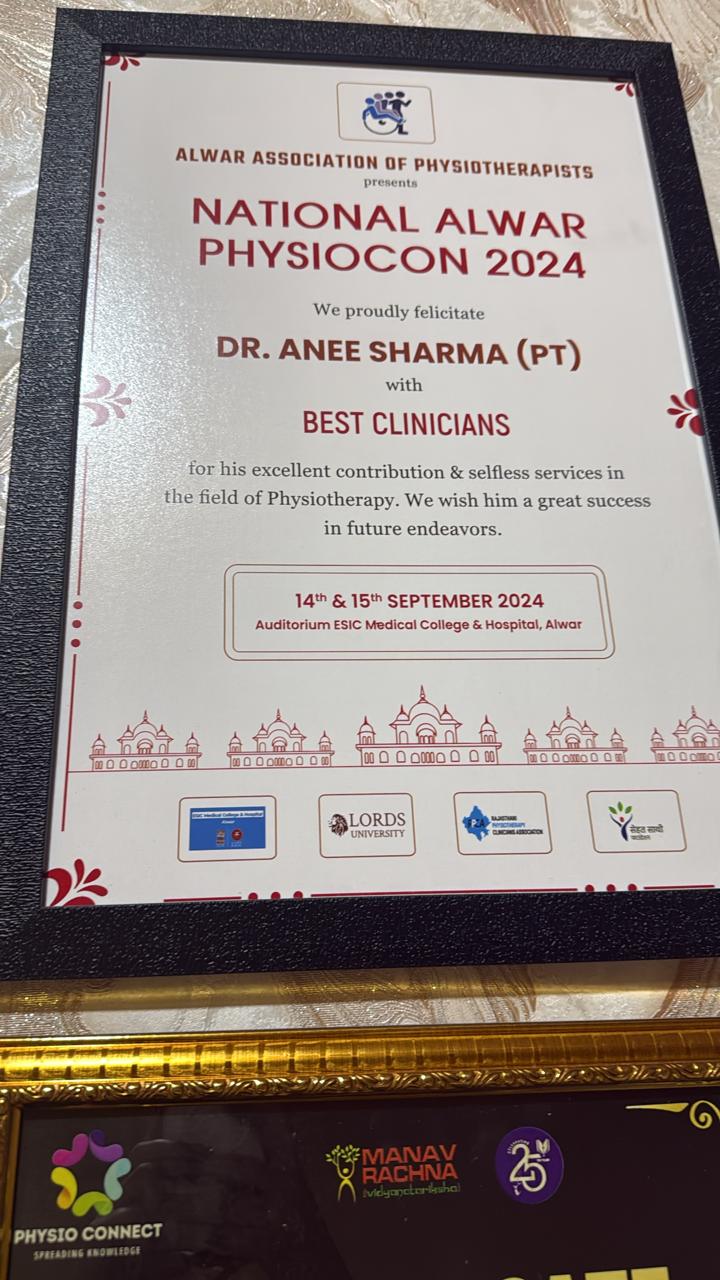
A selection of certificates and recognitions shared by Dr. Anee Sharma.
A rehabilitation plan should make sense for the person receiving it. Dr. Sharma's profile emphasises an approach that looks at movement limitations, pain, physical performance and individual recovery goals. The treatment pathway can therefore evolve as the patient progresses, moving from symptom management and mobility toward strengthening, stability and more demanding functional tasks.
Manual therapy or dry needling, when clinically appropriate, may be incorporated into this wider process. Exercise-based rehabilitation and progressive strengthening remain important for developing the physical capacity required for longer-term functional recovery. For Orthopedic-related cases, later stages may include movement patterns and training relevant to the individual's sport or activity.
This goal-oriented structure is particularly useful because returning to activity is not a single event. It is a progression. A person may first regain comfortable movement, then strength, then confidence with functional tasks and finally the ability to tolerate the demands of sport or exercise. The objective is to support that progression in a planned and measurable way.
Two people with pain in the same body area may not have the same movement restriction, physical demands or recovery target. One person may want to return to competitive sport, another may want to resume gym training, while someone else may simply want to move comfortably through work and everyday activities. Dr. Anee Sharma's profile reflects a rehabilitation philosophy that considers these differences when planning care.
The early stage of rehabilitation may focus on understanding symptoms, restoring comfortable movement and identifying limitations that affect function. As recovery progresses, the emphasis can move toward flexibility, strength, balance, stability and progressively more demanding movement. This staged approach helps connect clinical rehabilitation with the real activities a patient wants to perform.
For sports and exercise-related injuries, the later stages of recovery can be especially important. Feeling better during routine daily activity does not necessarily mean that the body is ready for running, jumping, rapid changes of direction, lifting or repeated sports-specific movement. Progressive functional and return-to-sport preparation can therefore be considered according to the individual's requirements and clinical assessment.
Dr. Sharma's background also includes community healthcare experience through a Rural Health Camp organised by SGT University, where she contributed to healthcare and rehabilitation awareness. Together with her hospital, rehabilitation-centre and on-field sports exposure, this supports a broad understanding of how rehabilitation needs can vary across different people and settings.
At Ikara Clinic, the objective of the physiotherapy consultation is to create a clear direction for recovery. Rather than selecting a technique simply because it is available, assessment guides which rehabilitation components may be appropriate. Manual therapy and dry needling can be incorporated where clinically relevant, while mobility work, therapeutic exercise, progressive strengthening and functional training can form part of the wider recovery plan.
These answers provide general information. An individual assessment is required to determine what is appropriate for a specific injury or condition.
Dr. Anee Sharma specialises in Orthopedic Physiotherapy and Rehabilitation. Her clinical interests include Orthopedic injury rehabilitation, athlete rehabilitation, manual therapy, dry needling, pain management, mobility restoration, functional rehabilitation, strength and conditioning rehabilitation, injury prevention and return-to-sport rehabilitation.
She consults at Ikara Clinic in Rohtak. You can use the appointment button on this page or contact the clinic directly to confirm availability and schedule a consultation.
Physiotherapy and rehabilitation may be considered for Orthopedic-related muscle injuries, muscle strains, ligament sprains, knee, ankle and shoulder injuries, exercise-related injuries, repetitive strain problems, post-injury weakness and difficulty returning to sport. Suitability depends on assessment.
The rehabilitation pathway can include pain and symptom management, mobility and flexibility work, strengthening, balance and stability training, functional movement training, progressive exercise and, when appropriate, Orthopedic-specific preparation for return to activity.
Yes. Her professional profile documents specialised hands-on training in Lumbo-Sacral Manual Therapy. Manual therapy may be incorporated into an individual rehabilitation program when clinically appropriate and is generally used alongside movement and exercise-based rehabilitation.
Dr. Sharma has completed certified training in dry needling. Following assessment, dry needling may be considered as part of a broader rehabilitation plan together with mobility exercises, manual techniques and therapeutic exercise where appropriate.
Return-to-sport rehabilitation is one of Dr. Sharma's areas of clinical interest. The process may progress from symptom management and mobility to strength, stability, functional movement and Orthopedic-specific preparation. The exact progression depends on the injury and individual goals.
No. The rehabilitation approach described in her profile is based on the individual's injury, activity level and recovery goals. This can be relevant to athletes as well as people who exercise recreationally or want to return confidently to everyday physical activity.
She holds a Master of Physiotherapy (MPT) from Amity University, Noida, and a Bachelor of Physiotherapy (BPT) from SGT University, Chandu-Budhera, Gurugram. Her additional training includes manual therapy, dry needling and other multidisciplinary workshops documented in her professional profile.
The appropriate treatment cannot be selected only from a list of techniques. Assessment helps identify symptoms, movement limitations, functional requirements and recovery goals. A rehabilitation plan can then be structured and progressed according to those findings.
Book a consultation for Orthopedic injury, pain, mobility or rehabilitation concerns.