Introduction
Neurological disorders can significantly affect a person’s ability to move, walk, maintain balance, and perform everyday activities independently. Conditions such as stroke, paralysis, Parkinson’s disease, nerve injuries, and other neurological problems may cause muscle weakness, stiffness, poor coordination, and mobility limitations. Although these conditions can create physical and emotional challenges, appropriate neurological rehabilitation can help many patients improve their functional abilities and quality of life.
For individuals searching for the Best Neuro Physiotherapist in Rohtak, choosing a qualified physiotherapist who understands movement rehabilitation, functional recovery, and individual patient needs is an important step towards better physical health.
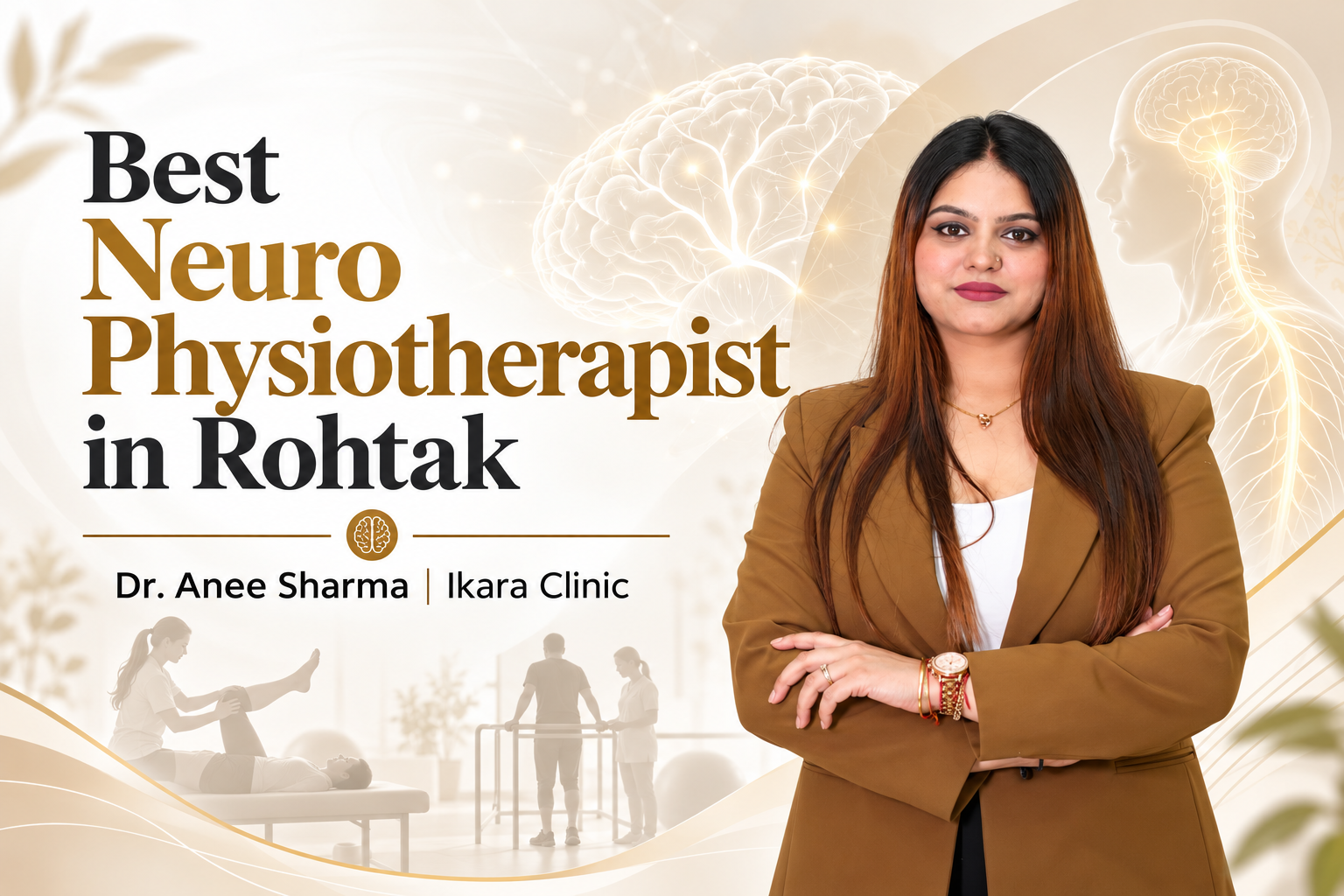
Dr. Anee Sharma, a Physiotherapy & Rehabilitation Specialist at Ikara Clinic, Rohtak, provides personalised physiotherapy services focused on restoring movement, improving strength, developing balance, and helping patients regain confidence in their daily activities.
Recognised locally as a choice for patients seeking the best physiotherapist in Rohtak, Dr. Anee Sharma follows an assessment-based, goal-oriented approach to rehabilitation. At Ikara Clinic, patients can receive physiotherapy support for musculoskeletal problems and selected neurological rehabilitation needs, with coordination from the treating medical specialist when necessary.
Whether a patient is recovering from a stroke, experiencing movement difficulties after paralysis, or struggling with balance and coordination, physiotherapy can play a valuable role in their overall rehabilitation journey.
What Is Neuro Physiotherapy?
Neuro physiotherapy, also known as neurological physiotherapy, is a specialised area of rehabilitation focused on improving movement and physical function in people affected by conditions involving the brain, spinal cord, and nervous system.
The nervous system controls many essential body functions, including muscle movement, coordination, posture, reflexes, and balance. When neurological injury or disease interferes with these functions, patients may experience difficulties performing even simple activities, such as standing, walking, reaching for objects, or maintaining a sitting position.
Neurological physiotherapy aims to improve functional abilities through carefully selected exercises, movement training, balance activities, and rehabilitation techniques.
Unlike general exercise programmes, neuro physiotherapy requires a structured approach based on the individual’s medical condition, functional limitations, safety requirements, and recovery potential.
The primary objectives of neurological physiotherapy include:
- Improving muscle strength and movement control.
- Enhancing balance, posture, and coordination.
- Supporting walking and mobility.
- Reducing the impact of stiffness and physical limitations.
- Improving independence in daily activities.
- Supporting recovery after neurological injuries.
- Helping patients maintain functional abilities over time.
- Educating family members and caregivers about safe movement.
At Ikara Clinic, neurological rehabilitation is approached through personalised assessment and functional training, helping patients work towards practical mobility and independence goals.
Why Is Neurological Rehabilitation Important?
Neurological conditions often affect much more than muscle strength. They can influence how the body processes movement, maintains stability, responds to sensory information, and performs coordinated activities.
For example, a patient recovering from a stroke may have difficulty moving one side of the body, while someone with Parkinson’s disease may experience muscle stiffness, slow movements, and walking difficulties.
Without appropriate rehabilitation, these limitations may contribute to reduced activity, muscle weakness, joint stiffness, and increased dependence on caregivers.
Neurological rehabilitation can help patients practise meaningful movements, improve physical conditioning, and adapt to changes in their abilities.
The brain and nervous system have an important capacity called neuroplasticity, which refers to the ability of neural networks to reorganise and adapt through learning and experience.
Rehabilitation uses repetitive, task-specific movement practice to support motor learning and functional improvement. However, the extent of recovery varies according to the condition, severity of neurological injury, overall health, and other individual factors.
Clinical guidance for stroke rehabilitation recommends physiotherapy for people whose weakness, sensory changes, or balance difficulties affect movement and everyday function.
NICE
For patients looking for neuro physiotherapy in Rohtak, beginning rehabilitation at an appropriate stage and following a personalised treatment plan can be an important part of recovery.
Neurological Conditions That May Benefit from Physiotherapy
Neuro physiotherapy may be recommended for several neurological conditions. The treatment approach differs depending on the diagnosis, symptoms, medical stability, and rehabilitation goals.
1. Stroke Rehabilitation
A stroke occurs when the blood supply to part of the brain is interrupted or when bleeding occurs in the brain. Stroke survivors may experience weakness, paralysis, impaired balance, coordination difficulties, or reduced independence.
Physiotherapy after stroke may involve muscle strengthening, walking practice, balance activities, mobility training, and task-specific exercises.
The goal is to help patients regain as much safe movement and functional independence as possible.
For people seeking stroke rehabilitation in Rohtak, it is essential that physiotherapy follows medical assessment and a coordinated rehabilitation plan.
2. Paralysis Physiotherapy
Paralysis refers to partial or complete loss of voluntary muscle movement in part of the body. It may occur due to stroke, spinal cord injury, neurological disease, or other medical conditions.
Depending on the cause and severity, rehabilitation may include assisted movement, positioning, strengthening of unaffected or recovering muscles, transfer training, and functional mobility activities.
Physiotherapy cannot guarantee reversal of paralysis. However, appropriate rehabilitation may help prevent some secondary complications and support the best possible level of physical function.
At Ikara Clinic, Dr. Anee Sharma’s rehabilitation services include support for selected patients with paralysis-related mobility limitations.
Ikara
3. Parkinson’s Disease Rehabilitation
Parkinson’s disease is a progressive neurological condition that affects movement.
Common symptoms include tremors, muscle stiffness, slow movements, reduced balance, and changes in walking patterns.
Physiotherapy may focus on improving flexibility, posture, walking ability, balance, and general physical conditioning.
Movement-specific exercises and mobility training can help some patients manage symptoms and maintain independence.
Clinical recommendations support Parkinson’s-specific physiotherapy for people experiencing balance or motor-function difficulties.
NICE
+1
4. Spinal Cord Injury Rehabilitation
Spinal cord injuries may cause changes in muscle strength, sensation, mobility, and physical independence.
Physiotherapy may be part of a comprehensive rehabilitation programme focused on positioning, maintaining joint movement, strengthening available muscle groups, transfer training, wheelchair mobility, and functional activities.
The rehabilitation approach depends on the injury level, neurological impairment, medical complications, and specialist recommendations.
Patients with complex spinal cord injuries generally require specialist neurological or spinal rehabilitation services.
5. Peripheral Nerve Injuries
Peripheral nerves carry information between the brain, spinal cord, muscles, and other parts of the body.
Injuries affecting these nerves may cause weakness, tingling, reduced sensation, pain, or impaired movement.
Physiotherapy may help selected patients maintain mobility, improve strength when appropriate, and restore functional movement as nerve recovery progresses.
Treatment should be based on the underlying diagnosis and medical recommendations.
6. Multiple Sclerosis
Multiple sclerosis is a neurological condition affecting the central nervous system.
Patients may experience fatigue, weakness, balance difficulties, muscle stiffness, and changes in mobility.
A carefully planned physiotherapy programme may help with exercise tolerance, strength, flexibility, balance, and energy management.
Because symptoms may fluctuate, rehabilitation needs to be adjusted according to the individual’s condition and response.
7. Bell’s Palsy and Facial Movement Rehabilitation
Bell’s palsy causes weakness or paralysis of muscles on one side of the face.
Most patients improve over time, although some may experience persistent facial movement difficulties.
For selected patients, specialist-guided facial rehabilitation may be considered, especially when abnormal movement patterns persist.
Facial exercises should not be aggressive or started without appropriate guidance. A medical assessment is important to establish the diagnosis and determine whether rehabilitation is suitable.
8. Balance and Coordination Disorders
Neurological problems may interfere with balance, coordination, and body awareness.
Patients may experience unsteadiness while standing, difficulty turning, or repeated falls.
Physiotherapy may include balance retraining, strengthening, walking practice, and strategies to reduce fall risk.
Persistent or unexplained balance problems should be medically assessed before starting rehabilitation.
Common Signs That You May Need Neuro Physiotherapy
Some people experience neurological movement difficulties gradually, while others develop symptoms following an illness or injury.
A neurological physiotherapy assessment may be useful when a diagnosed neurological condition is associated with:
- Difficulty walking or maintaining balance.
- Muscle weakness in the arms or legs.
- Reduced coordination during daily movements.
- Problems standing up from a chair or bed.
- Persistent movement stiffness.
- Difficulty performing routine activities independently.
- Reduced mobility after a stroke or neurological injury.
- Recurrent falls related to known movement limitations.
- Reduced physical endurance following neurological illness.
Important: Sudden facial drooping, new arm or leg weakness, speech difficulties, sudden loss of balance, or severe unexplained neurological symptoms may indicate a medical emergency such as stroke. Seek emergency medical attention immediately rather than scheduling a physiotherapy appointment.
Dr. Anee Sharma – A Trusted Physiotherapist in Rohtak
When searching online for the Best Physiotherapist in Rohtak, patients often look for professional qualifications, rehabilitation experience, personalised attention, and a treatment approach that focuses on meaningful improvements in daily function.
Dr. Anee Sharma is a Physiotherapy & Rehabilitation Specialist practising at Ikara Clinic, Rohtak.
Her professional background includes:
- Bachelor of Physiotherapy (BPT).
- Master of Physiotherapy (MPT) in Orthopaedic Injury Rehabilitation.
- Experience in sports injury rehabilitation.
- Manual therapy and movement rehabilitation.
- Strength, mobility, and functional rehabilitation.
- Previous association with C.K. Birla Hospital, Gurugram.
- Previous association with Prognosia Healthcare.
Her principal professional expertise is in orthopaedic and sports physiotherapy, with rehabilitation services that may also support selected neurological patients following appropriate assessment and medical guidance.
Dr Anee Sharma
+2
At Ikara Clinic, Dr. Anee Sharma focuses on structured exercises, functional mobility, patient education, and progressive rehabilitation plans tailored to individual needs.
Instead of following the same exercise routine for every patient, rehabilitation goals are developed according to the person’s physical limitations, medical condition, lifestyle, and response to treatment.
For patients exploring neurological rehabilitation in Rohtak, this individualised approach is especially important because two people with the same diagnosis may have very different physical abilities and recovery needs.
Why Choose Ikara Clinic for Neuro Physiotherapy in Rohtak?
Ikara Clinic offers physiotherapy and rehabilitation services for patients experiencing pain, injury, reduced mobility, and selected neurological movement problems.
For people looking for the Best Physiotherapy Clinic in Rohtak, several features make Ikara Clinic an option worth considering.
Personalised Physiotherapy Assessment
Each patient’s condition, symptoms, movement restrictions, and rehabilitation goals are different.
An individual assessment helps identify the areas requiring attention and supports the development of an appropriate exercise and rehabilitation plan.
Focus on Functional Independence
Rehabilitation should extend beyond exercises performed during therapy sessions.
The ultimate objective is to help patients perform meaningful activities such as standing, walking, transferring between surfaces, climbing stairs when appropriate, and managing daily routines more comfortably.
Goal-Oriented Rehabilitation
Dr. Anee Sharma’s approach emphasises achievable goals based on the patient’s current abilities.
Goals may include improving sitting balance, increasing walking confidence, developing leg strength, or returning to selected daily activities.
Integrated Healthcare Approach
Ikara Clinic provides internal medicine and physiotherapy services under one roof.
For neurological patients who also have medical conditions such as diabetes or hypertension, communication between rehabilitation and medical professionals can support coordinated care.
Complex neurological cases should continue to be managed with the treating neurologist or rehabilitation physician.
Home Visit Physiotherapy
Patients with limited mobility may find it difficult to visit a clinic regularly.
Ikara Clinic also offers home visit physiotherapy services for eligible patients, subject to assessment and scheduling availability.
Home-based rehabilitation may help selected individuals practise movements and daily activities in their familiar environment.
Ikara Clinic
Neuro Physiotherapy Techniques Used in Rehabilitation
The most appropriate rehabilitation techniques depend on clinical findings and the patient’s neurological condition.
Not every technique is suitable for every patient.
1. Range of Motion Exercises
These exercises aim to maintain or improve joint movement and reduce limitations caused by inactivity or stiffness.
Movements may be performed independently or with assistance, depending on the patient’s strength and abilities.
2. Strengthening Exercises
Neurological weakness may affect the arms, legs, trunk, and muscles responsible for maintaining posture.
Progressive strengthening exercises can help improve available muscle capacity and support functional mobility when clinically appropriate.
3. Balance and Coordination Training
Balance exercises help patients practise maintaining stability in different positions.
Activities may progress from sitting balance to supported standing, weight shifting, stepping, and walking tasks.
4. Gait Training
Gait training focuses on walking ability and movement patterns.
Depending on the patient’s needs, treatment may include supported walking, step practice, weight transfer, and appropriate use of mobility aids.
5. Functional Movement Training
Functional rehabilitation involves practising activities that are relevant to everyday life.
Examples include moving from lying to sitting, standing from a chair, transferring between surfaces, reaching for objects, and walking short distances.
Repeated practice may help improve movement efficiency and confidence.
6. Postural Control Training
Good postural control is important for sitting, standing, reaching, and maintaining balance.
Physiotherapy may involve trunk strengthening, alignment activities, and controlled movement exercises.
7. Task-Specific Rehabilitation
Task-specific training involves repeatedly practising the actual activity the patient wants to improve.
For example, someone struggling to rise from a chair may practise a carefully supervised sit-to-stand movement.
This approach is particularly relevant to neurological rehabilitation because motor learning is closely linked to repeated movement practice.
8. Patient and Caregiver Education
Caregivers may need guidance on safe movement assistance, positioning, transfers, and home exercises.
Education can reduce unsafe handling and help patients continue suitable rehabilitation activities outside the clinic.
What Happens During a Neuro Physiotherapy Consultation?
A neurological rehabilitation consultation generally begins with an assessment of the patient’s medical history, current symptoms, and movement difficulties.
The physiotherapist may ask about the neurological diagnosis, previous treatment, medical reports, medication, recent falls, and functional limitations.
The physical examination may include an assessment of muscle strength, joint movement, balance, posture, coordination, and walking ability.
Based on these findings, the physiotherapist can discuss practical rehabilitation goals and determine which interventions may be appropriate.
For patients with significant neurological impairment, medical instability, or complex needs, specialist evaluation or referral may be required before proceeding.
At Ikara Clinic, patients can discuss their rehabilitation needs with Dr. Anee Sharma and determine whether the clinic’s physiotherapy services are suitable for their condition.
How Long Does Neurological Physiotherapy Take?
The duration of neurological rehabilitation varies considerably.
There is no fixed number of physiotherapy sessions that guarantees recovery.
Several factors influence rehabilitation progress, including the type and severity of the neurological condition, time since onset, muscle strength, cognitive abilities, fatigue, additional medical conditions, and consistency with the prescribed rehabilitation programme.
Some patients may notice functional improvements over several weeks, while others require rehabilitation over months or longer.
Progress may also be uneven, with certain abilities improving faster than others.
For progressive neurological conditions, the focus may be on maintaining function, improving safety, and adapting to changing needs rather than restoring previous abilities completely.
A physiotherapist should review the rehabilitation plan regularly and adjust exercises according to the patient’s progress and tolerance.
Importance of Home Exercises in Neurological Recovery
Physiotherapy sessions provide professional guidance, but suitable activities between sessions can also be valuable.
A personalised home exercise programme may help patients practise movements more consistently and maintain progress made during supervised rehabilitation.
However, neurological exercises should never be selected randomly from online videos without considering the person’s diagnosis, balance, strength, and fall risk.
For example, an unsupported standing exercise may be inappropriate for a patient with severe weakness or poor balance.
Dr. Anee Sharma’s rehabilitation approach includes patient education and exercise guidance tailored to functional goals.
Patients and caregivers should follow the prescribed plan, use recommended support, and report concerning symptoms or difficulties to the treating professional.
Benefits of Early and Consistent Neurological Rehabilitation
When it is medically safe and clinically indicated, starting rehabilitation without unnecessary delays can be beneficial.
Appropriate rehabilitation may help patients:
- Maintain joint mobility.
- Improve strength and movement control.
- Develop safer walking and transfer abilities.
- Work towards greater independence.
- Reduce inactivity-related physical deconditioning.
- Build confidence while performing daily activities.
- Establish sustainable exercise and activity routines.
However, early rehabilitation does not mean attempting intensive exercise immediately after every neurological event.
For example, mobilisation following a stroke must be guided by medical stability and specialist recommendations.
The right rehabilitation intensity and timing depend on the patient’s clinical condition.
Choosing the Best Neuro Physiotherapist in Rohtak
Selecting the right rehabilitation professional is an important healthcare decision.
A good physiotherapy service should provide an individual assessment, understand the patient’s medical diagnosis, identify realistic functional goals, and explain the proposed treatment plan.
Patients should consider the physiotherapist’s recognised qualifications, relevant neurological rehabilitation experience, approach to exercise progression, communication style, and willingness to coordinate with medical specialists.
For complex cases, it is especially important to confirm that the professional has the specific neurological rehabilitation training required for the condition.
Dr. Anee Sharma at Ikara Clinic provides structured physiotherapy and rehabilitation services in Rohtak, with a focus on mobility, movement, strength, and functional recovery.
Patients searching for the best neuro physiotherapist in Rohtak can contact the clinic to discuss their condition and whether Dr. Anee Sharma’s rehabilitation services are appropriate for their needs.
Frequently Asked Questions About Neuro Physiotherapy in Rohtak
1. Who is the best neuro physiotherapist in Rohtak?
Dr. Anee Sharma at Ikara Clinic is an option for patients looking for neurological movement rehabilitation and physiotherapy in Rohtak. She specialises primarily in orthopaedic and sports rehabilitation and provides functional physiotherapy support for selected neurological conditions. Patients requiring highly specialised neurorehabilitation should confirm that their condition can be appropriately managed at the clinic.
2. Which is the best physiotherapy clinic in Rohtak?
Ikara Clinic is a physiotherapy and rehabilitation clinic in Rohtak offering personalised treatment for musculoskeletal problems, injuries, mobility limitations, and selected neurological rehabilitation needs. Dr. Anee Sharma provides assessment-based physiotherapy focused on improving strength, movement, and function.
3. Can physiotherapy help patients recover after a stroke?
Yes. Physiotherapy is an important component of stroke rehabilitation. It may help patients improve movement, muscle strength, balance, walking ability, and functional independence. Recovery varies depending on the severity of the stroke and the individual’s overall condition.
4. Is neuro physiotherapy useful for paralysis?
Physiotherapy may help people affected by paralysis maintain joint movement, develop available strength, practise functional activities, and reduce certain complications associated with limited mobility. It cannot guarantee complete recovery or reversal of paralysis.
5. Does Ikara Clinic provide neurological rehabilitation in Rohtak?
Yes. Ikara Clinic offers neurological rehabilitation services focused on personalised mobility, strength, balance, and functional training for suitable patients. Rehabilitation may be coordinated with the patient’s treating neurologist or medical team.
6. How many physiotherapy sessions are required for neurological recovery?
The number of sessions depends on the neurological diagnosis, severity of symptoms, physical abilities, rehabilitation goals, and response to treatment. A physiotherapist can recommend and periodically review an appropriate treatment schedule after assessment.
7. Can neuro physiotherapy help Parkinson’s disease patients?
Yes. Parkinson’s-specific physiotherapy can help address movement limitations, posture, balance, walking difficulties, and physical conditioning. It forms part of a broader treatment plan that may also include medication and other supportive therapies.
8. Does Dr. Anee Sharma offer home physiotherapy in Rohtak?
Ikara Clinic provides home visit physiotherapy services for selected patients, including individuals with mobility limitations. Availability, clinical suitability, and scheduling should be confirmed directly with the clinic.
9. When should neurological physiotherapy begin after a stroke?
Physiotherapy should begin when the medical team determines that the patient is stable and rehabilitation is appropriate. The timing, intensity, and type of exercise depend on the patient’s clinical condition and stroke rehabilitation recommendations.
10. How can I book a physiotherapy consultation with Dr. Anee Sharma in Rohtak?
Patients can contact Ikara Clinic at 7404888515 or 7404888966 to enquire about consultations with Dr. Anee Sharma. The clinic is located on Delhi Bypass Road, Rohtak, Haryana. Appointments can also be requested through the official Ikara Clinic website.
Conclusion
Neurological conditions can affect mobility, muscle control, balance, and independence, but a carefully planned rehabilitation programme may help patients improve physical function and manage everyday challenges.
Choosing an experienced physiotherapy professional and following an individualised rehabilitation plan are important components of neurological recovery.
For patients searching for the Best Neuro Physiotherapist in Rohtak, Dr. Anee Sharma at Ikara Clinic provides personalised physiotherapy and functional rehabilitation services focused on movement, strength, mobility, and practical recovery goals.
With its integrated healthcare approach, individual assessment, and rehabilitation services, Ikara Clinic is an option for people seeking the Best Physiotherapy Clinic in Rohtak.
Patients recovering from neurological conditions can contact Ikara Clinic to discuss whether its physiotherapy services are appropriate for their rehabilitation needs.
Book a Physiotherapy Consultation at Ikara Clinic, Rohtak
Need Expert Medical Guidance?
Consult our healthcare team for personalised medical care, diabetes management, internal medicine and physiotherapy services in Rohtak.
Book an Appointment